Pet Urine in the Pad?
We Flush It Out.
Our oxidizer flush treatment goes through the carpet, into the pad, and down to the subfloor, breaks the urine down, then pulls it back out with a subsurface extraction tool. Most pet urine damage is resolved this way, with no carpet pulled and no pad replaced.
The honest truth: regular carpet cleaning, even professional hot water extraction, only treats the carpet face. If urine got into the pad, the smell comes back every time humidity rises. That doesn't mean you need new pad. In most homes, an oxidizer flush reaches the pad and subfloor and pulls the urine out. Pad replacement and subfloor sealing are for severe cases, and we'll show you which one you have before we start.
The Oxidizer Flush: Urine Out of the Pad, No Tear-Out.
Most pet urine damage doesn't need new pad. We push an oxidizing treatment down through the carpet into the pad and subfloor, let it break the urine down, then pull it all back out with a subsurface extraction tool. The carpet stays down and the smell goes with it.
Find every spot
Blacklight and moisture testing show us exactly where the urine is, including the old spots you can't see or smell anymore.
Flood it with oxidizer
We apply our oxidizing treatment heavily enough to go as deep as the urine did: through the carpet, into the pad, down to the subfloor. An oxidizer breaks urine down chemically instead of covering it with fragrance.
Let it work
The treatment needs time to break down the urine salts and the odor they cause, so we give it time to do its job before we pull anything out.
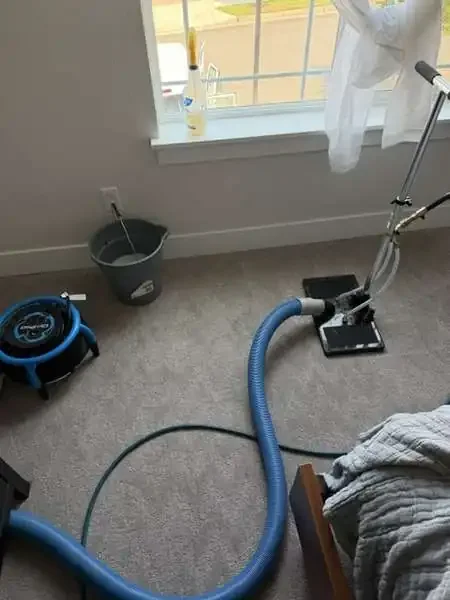
Extract it with the water claw
A regular cleaning wand only reaches the top of the carpet. The water claw is a subsurface extractor: you stand on it, it seals to the carpet, and the truck-mount pulls the solution and the broken-down urine back up out of the pad.
Dry it down
Air movers go down right away so the carpet and pad dry fast. No pulling carpet, no new pad, no seams to worry about.
Most homes we see
- Accident spots that smell again after regular cleaning
- Urine that soaked into the pad
- Pets going back to the same spot
- Move-outs, rentals, and getting a house ready to list
Severe cases only
- Spots that have been soaked over and over for years
- Pad that's breaking down or crumbling
- A subfloor that's stained through or swollen
- Odor that still comes back after a flush
Then we pull the pad and seal the subfloor. See that process below.
Cleaning Only Gets The Surface.
Pet urine doesn't just sit on top of carpet. It wicks down through the carpet fibers, saturates the padding underneath, and soaks into the subfloor below. The padding acts like a sponge — it holds urine long after the carpet surface appears clean.
When humidity rises — especially here in Portland — those uric acid crystals in the padding and subfloor reactivate and the odor returns. That's why professionally cleaned carpet can still smell like urine weeks later.
The fix is to treat every layer the urine reached, and in most homes that doesn't mean tearing anything out. Our oxidizer flush goes down through the carpet and pad to the subfloor, then the water claw pulls it back up. Only severe cases need the pad pulled and the subfloor sealed.
Cleaning the carpet face
Removes surface contamination and temporarily reduces odor. The urine in the pad and subfloor remains. Smell returns — often within weeks — especially on humid Portland days.
The Carpet Surgeon approach (most cases)
Oxidizer goes as deep as the urine did and breaks it down, then the water claw extracts it from the pad. The odor source is removed, not masked, and nothing gets torn out.
Full restoration
When the pad is breaking down or the subfloor is saturated after years of accidents, we pull the pad, clean and seal the subfloor, and install new pad and tack strip. We'll assess honestly and recommend the right approach for your situation.
For Severe Cases: Full Restoration
When urine has been soaking in for years or the pad is breaking down, a flush isn't enough. Every photo below is from an actual Carpet Surgeon job. This is what full restoration looks like, with no shortcuts.

Assess the Damage
The first step is understanding the full extent of the damage. What's visible on the carpet surface is almost never the whole picture. We use blacklight inspection and moisture testing to map exactly where urine has penetrated — and how deep it's gone. No guessing. No assumptions.


Pull the Carpet & Expose the Pad
We carefully pull back the carpet to expose the padding beneath. In a severe case like this one, the pad is heavily saturated and breaking down. You can see the discoloration and smell it immediately. Pad in this condition can't be flushed clean. It has to come out.

Remove Pad & Expose the Subfloor
Once the padding is removed, we can see the subfloor. Urine that has soaked through the pad leaves visible staining on the wood or concrete below. This is the odor source. When the subfloor is stained like this, it has to be treated and sealed, or the smell keeps coming back no matter how many times the carpet is cleaned.

Clean & Seal the Subfloor
We treat the subfloor with a professional enzymatic cleaner to break down the uric acid crystals, then apply an odor-blocking sealant. This locks in any remaining odor molecules and creates a barrier so they can't reactivate. This step is what makes the fix permanent.

Install Fresh Padding & Tack Strip
With the subfloor clean and sealed, we install new padding and replace any tack strips that were saturated. Fresh pad means no residual contamination coming back up. The carpet now has a clean, dry, odor-free foundation to sit on. Everything below is brand new.

Replace or Reinstall the Carpet
Depending on the carpet's condition, we either reinstall the original carpet (cleaned with our pet urine treatment process) or replace the affected section. When replacing, we often pull carpet from a hidden area like a closet — using matching carpet so the repair is invisible. The closet gets a similar replacement so nothing looks out of place.

Full Tack Strip & Pad Replacement
On heavily affected areas, we replace all tack strips as well. Tack strips absorb urine at the carpet edges and hold odor even after everything else is cleaned. This photo shows a separate job where we pulled all tack, sealed the floor completely, and installed fresh tack and padding throughout. Nothing is reused if it was contaminated.
Everything We Offer for Pet Urine Damage
We assess each situation and recommend the right level of treatment, from an oxidizer flush to full subfloor restoration.
Urine Damage Assessment
Blacklight and moisture testing to map exactly where urine has penetrated and how deep. Always free, always honest — we tell you what you actually need.
Oxidizer Flush Treatment
Our go-to fix. Oxidizer applied deep enough to reach the pad and subfloor, then flushed and pulled out with a water claw subsurface extractor. Resolves most pet urine odor without tearing anything up.
Pad Removal & Replacement
Pull and dispose of contaminated padding, clean and seal the subfloor, install fresh padding and tack strip. For severe damage where the pad is breaking down.
Subfloor Cleaning & Sealing
Enzymatic treatment of the subfloor followed by professional odor-blocking sealant. Locks in remaining odor molecules permanently so they can never reactivate.
Carpet Section Replacement
When carpet is too damaged to save, we replace affected sections — often using matching carpet pulled from a closet so the repair is seamless and invisible.
Full Restoration Package
Assessment, pad removal, subfloor treatment and sealing, new tack strip, new pad, carpet reinstall or replacement. The complete fix — done once, done right.
We'll Tell You the Truth Before We Touch Anything
Most pet urine damage can be fixed with an oxidizer flush. Severe cases need full restoration. We'll assess your specific situation, show you exactly what we find, and give you an honest recommendation — not the most expensive option, the right one.
Book a Free AssessmentPet Urine Restoration FAQs
The questions Portland pet owners ask us most.
Pet Urine Damage Restoration by City
Our Other Services
Ready to Fix It for Good?
Free assessment, honest recommendation, permanent results. Book online or call us directly.
